
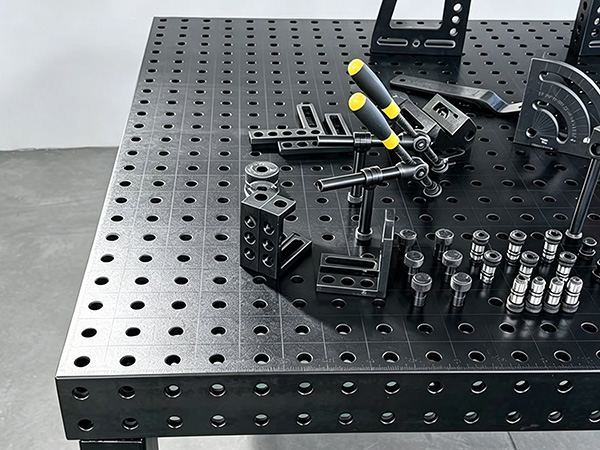
Detailed Introduction
The 3D welding table has become an indispensable core equipment in modern industrial welding, assembly and manufacturing processes, widely favored by mechanical processing, automotive manufacturing, engineering machinery and precision mold industries. Different from traditional fixed welding platforms with single functions and poor flexibility, the 3D welding table adopts a three-dimensional modular design, which perfectly solves the pain points of low positioning accuracy, poor workpiece adaptability and cumbersome clamping operation in traditional welding work, greatly improving the overall efficiency and processing quality of welding operations.
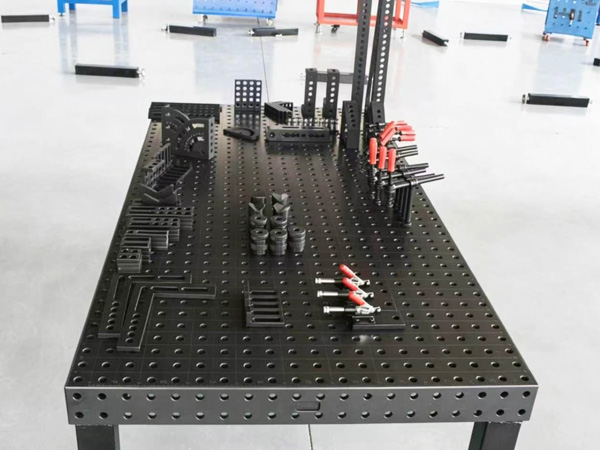
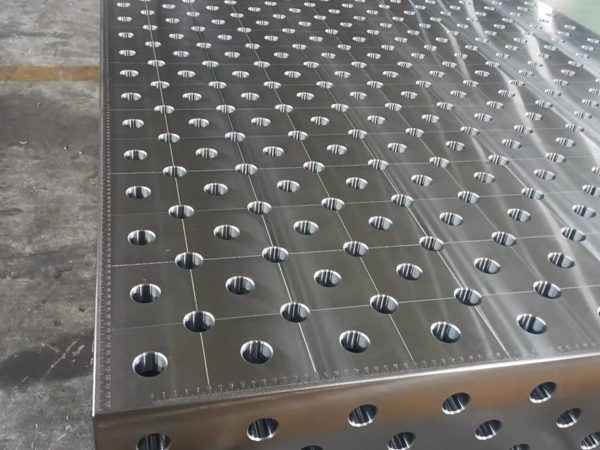
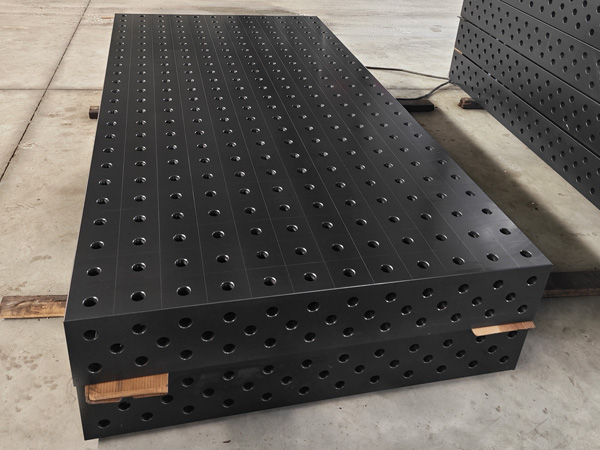
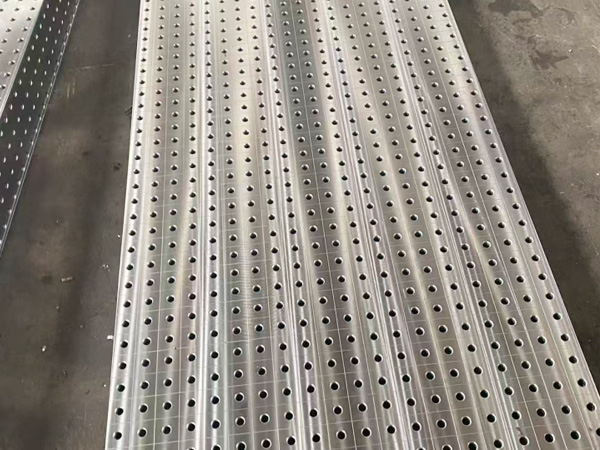
Constructed with high-strength carbon steel or alloy steel as the core material, the 3D welding table features excellent structural stability and wear resistance. The table surface is designed with standardized dense hole grids, with precise hole spacing and high machining flatness, ensuring zero-error positioning of various fixtures, supports and clamping components. The overall structure undergoes strict stress relief treatment and high-temperature quenching processing, which effectively avoids deformation caused by long-term welding high temperature, mechanical impact and heavy-load pressing, maintaining long-term dimensional stability and extending the service life of the equipment. Meanwhile, the table surface is treated with anti-rust and anti-scratch coating, adapting to harsh working environments such as welding spatter, high temperature and dust.
The most prominent advantage of the 3D welding table lies in its powerful three-dimensional adjustable and modular combination performance. It is equipped with a complete set of supporting accessories including adjustable clamping pliers, positioning pins, support blocks and angle brackets, which can realize free combination and multi-angle adjustment in horizontal, vertical and inclined directions. Whether it is simple planar workpieces, complex three-dimensional structural parts, frame components or irregular special-shaped parts, the table can complete rapid positioning, precise fixing and stable clamping. It thoroughly abandons the traditional manual lofting and temporary fixing methods, effectively avoids welding errors and workpiece deformation caused by manual positioning deviation, and ensures the consistency and precision of batch welding products.
In terms of operational efficiency and safety, the 3D welding table shows outstanding superiority. The standardized modular structure enables one-time clamping and multi-surface welding, eliminating the need for repeated positioning and flipping of workpieces, greatly shortening the auxiliary working time and improving welding efficiency by more than 30% compared with traditional processes. In addition, the reasonable structural design ensures uniform stress on the workpiece during welding, reduces welding residual stress, and improves the structural firmness and appearance quality of finished products. The smooth and standardized tabletop also reduces welding dead angles, facilitates slag cleaning and post-welding polishing, and optimizes the overall working process.
With the continuous upgrading of industrial manufacturing towards precision and intelligence, 3D welding tables have become a key equipment to improve the level of standardized welding. It not only reduces the technical threshold of welding operation and reduces the dependence on senior skilled workers, but also realizes standardized and standardized production of welding processes, providing a solid guarantee for product quality stability and production capacity improvement. For small and medium-sized processing factories and large industrial manufacturing enterprises alike, the 3D welding table is a cost-effective, high-efficiency and multi-functional production tool, which brings strong support for lean production and technological upgrading of the welding industry.

Copyright © Botou Hongye Machinery Equipment Co., Ltd All Rights Reserved Sitemap | Technical Support